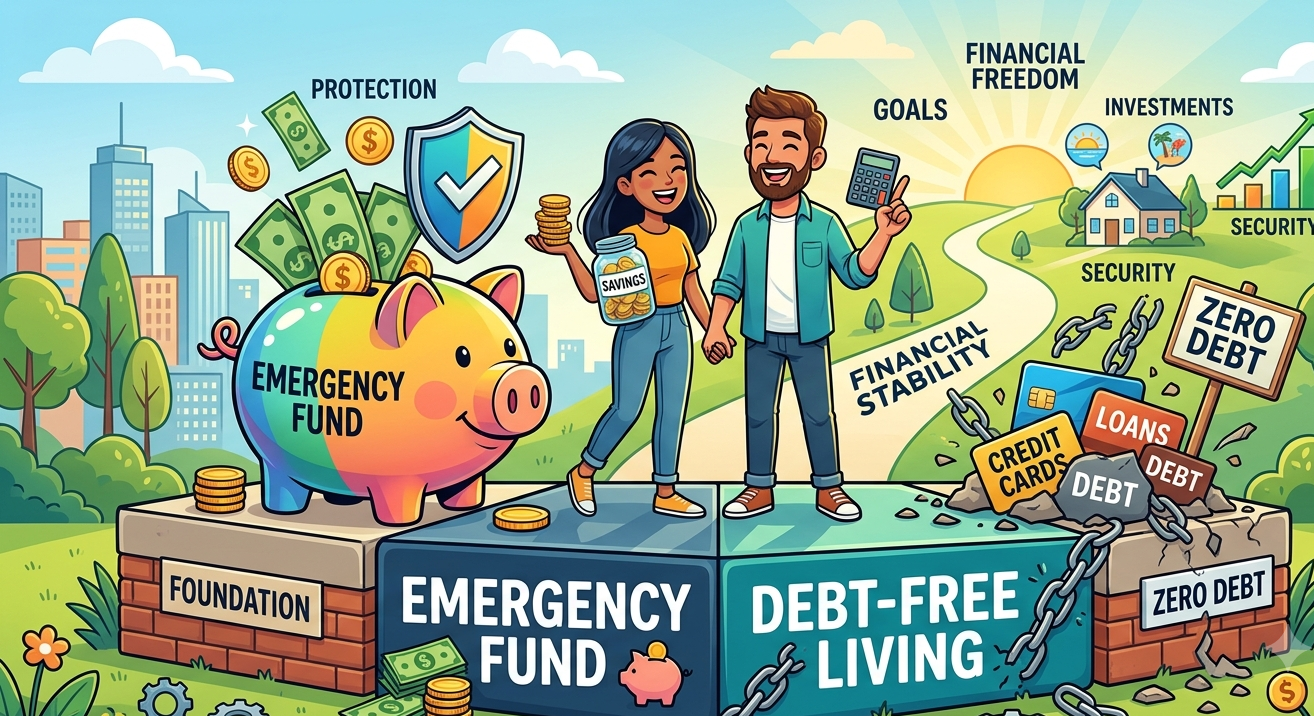
Financial security doesn’t come quickly. It takes steady planning, smart spending, and good financial choices. Two key parts of a healthy financial life are keeping an emergency fund and living without debt. These two things help give you peace of mind, reduce stress, and help you build wealth over time. Though life has its surprises,
being ready can make a big difference between staying financially stable and facing a tough time.
This article explains how important an emergency fund is, the benefits of living without debt, some practical ways to achieve both, and how they lead to long–term financial freedom.
What Is an Emergency Fund?
An emergency fund is money you save for unexpected events like job loss, medical problems, or expensive car repairs.
It acts as a safety net when things don’t go as planned. Unlike money saved for vacations or buying a house, this fund is for true emergencies and should not be used for regular spending or buying things you don’t really need.
Why an Emergency Fund Is Important
Life can be unpredictable.
Even if you have a steady job, you can face unexpected problems. Without money saved up, you might have to use credit cards or loans, which can lead to debt and stress.
An emergency fund offers several benefits:
– Helps cover unexpected medical bills
– Provides support if you lose your job temporarily
– Stops you from needing to borrow money
– Reduces anxiety about money
– Helps you make better decisions during crises
– Keeps your long–term financial plans safe
Having money ready for emergencies means you can handle them without getting overwhelmed.
How Much Should You Save?
Experts usually suggest saving between 3 to 6 months of your monthly expenses.
But this depends on your personal situation.
Three Months of Expenses
This is suitable for people with stable jobs, those in households with multiple incomes, or those with secure government jobs.
Six Months or More
This is better for freelancers, self–employed people, seasonal workers, families with one main income, or those in unstable jobs.
For example, if your monthly expenses are $2,000, you should save between $6,000 and $12,000.
How to Build an Emergency Fund
Building a fund can feel hard, especially if you live on a tight budget.
But saving little by little can lead to big results over time.
Set a Realistic Goal
Start with a small goal, like $500 or $1,000.
Reaching smaller goals can build confidence and keep you motivated.
Create a Monthly Budget
Track your income and spending to find areas where you can cut back.
Use these savings to build your emergency fund.
Automate Your Savings
Set up automatic transfers from your salary to a savings account each month.
This makes saving easier.
Reduce Unnecessary Spending
Small changes can make a big difference:
– Eat out less
– Cancel unused subscriptions
– Shop with a list
– Avoid buying things on a whim
Save Windfalls
Money from tax refunds, bonuses, gifts, or unexpected income can help speed up your savings.
Keep the Fund Accessible
Put the money in a high–interest savings account or a secure, easy-to-access account that earns some interest.
When Should You Use the Fund?
Not all unexpected costs are emergencies.
Here are some good reasons to use your emergency fund:
– Medical emergencies
– Job loss
– Urgent home repairs
– Essential car repairs
– Emergency travel due to family crises
Avoid using it for:
– Vacations
– Shopping
– Entertainment
– Luxury items
– Planned expenses
Once you use it, rebuilding it should be a top financial priority.
Understanding Debt–Free Living
Living debt–free means you don’t owe money for purchases and manage your financial obligations in a smart and intentional way.
While certain debts, like mortgages or education loans, can be investments, too much consumer debt often leads to long–term problems.
Living without debt lets you use your income to build wealth instead of paying off interest.
Types of Debt
Understanding different types of debt helps you know which to focus on.
Good Debt
Good debt can help you grow your income or wealth.
Examples include:
– Student loans
– Home mortgages
– Business loans
Even good debt should be handled carefully.
Bad Debt
Bad debt funds things that lose value or are unnecessary.
Examples include:
– Credit card debt
– Payday loans
– High–interest personal loans
– Buy–now–pay–later purchases without a plan
Bad debt often comes with high interest rates and makes it hard to pay off.
The Cost of Debt
Many people don’t realize how much debt can cost due to interest.
For example, a $5,000 credit card balance at a 20% interest rate can take years to pay off if you only make the minimum.
Over time, you could end up paying hundreds or even thousands in interest.
Debt can also lead to:
– Financial stress
– Poor credit management
– Less savings
About the Author