For many years, small businesses used similar methods to attract customers: billboards along local roads, half–page ads in town newspapers, paper flyers under car windshields, or listings in the Yellow Pages. These traditional ways worked well before the internet, but the way people shop has changed a lot. Today, most people start their shopping journey on a screen. Whether they’re looking for a local plumber, checking reviews on a nearby café, or ordering custom items from another state, they begin their search online.
For small businesses with limited budgets and resources, this shift isn’t a challenge—it’s actually a huge opportunity.
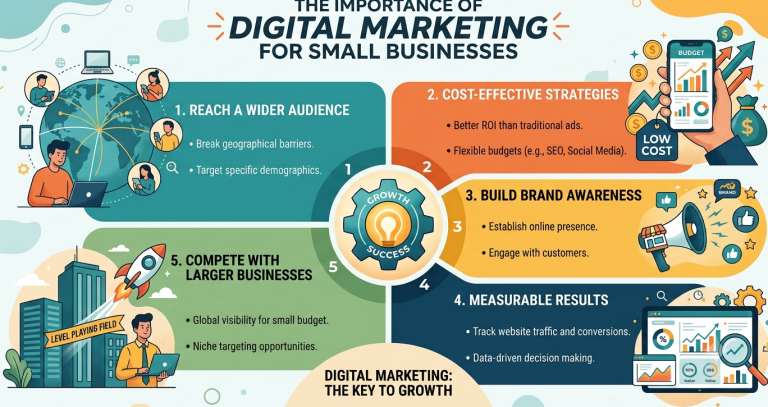
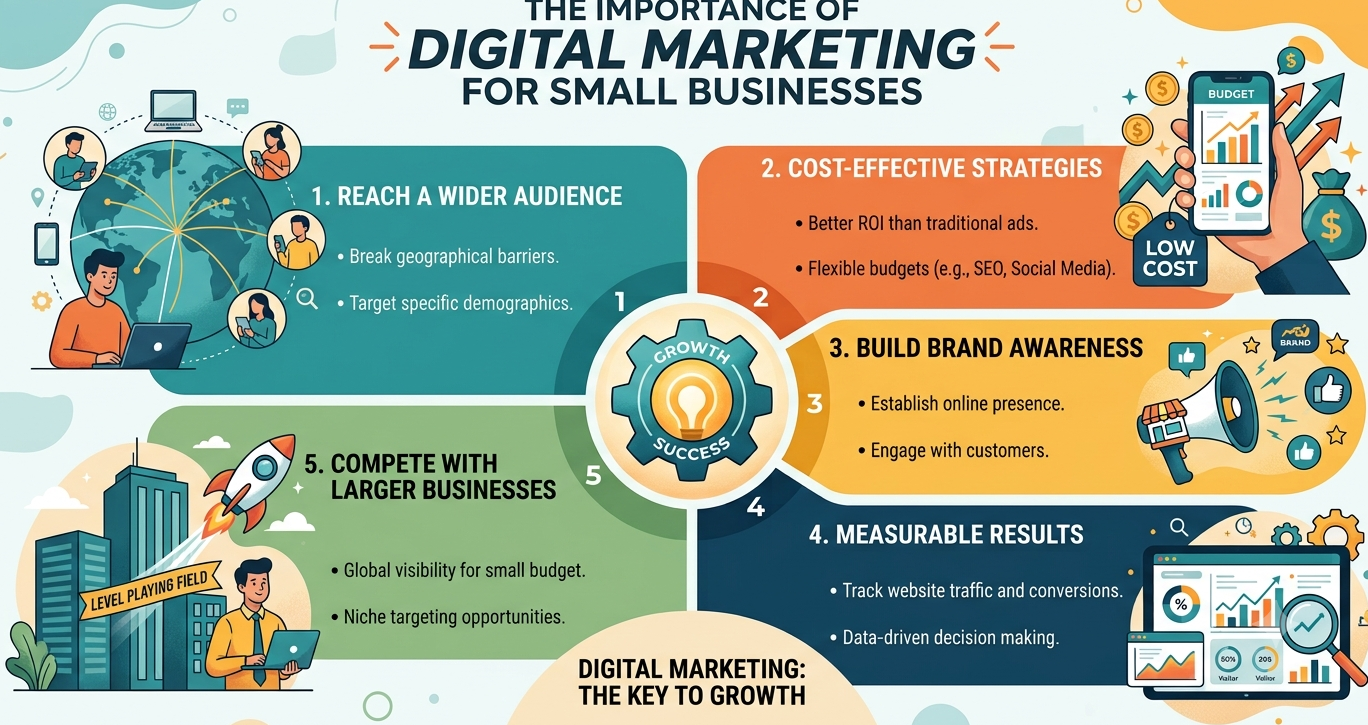
Digital marketing lets local shops and startups compete with big companies on a level playing field.
Reaching Customers Where They Spend Their Time
The main reason digital marketing is important for small businesses is about visibility—being where your audience is.
The average person spends more than six hours a day online, using search engines, social media, email, and video sites.
If you only rely on foot traffic or traditional ads, you miss most of the time people are online. When someone has a need or a desire, they don’t wait for a flyer to come through the mail. They open Google or check social media. If your business isn’t showing up in those results, it might as well not exist for that person. A strong digital presence ensures your business appears at the exact moment a customer is looking for your products or services.
Leveling the Playing Field Against Big Companies
In the past, small businesses had a big disadvantage compared to national brands.
Big companies can spend lots of money to get prime locations, air commercials, or take over newspapers.
Digital marketing changes this. Search engines and social platforms focus on relevance, quality, and engagement rather than how much money you spend. For example, a local hardware store can beat a national chain in Google search results for local queries like “hardware store near me” by using a Google Business Profile and getting good reviews. A boutique clothing brand can run a targeted Instagram campaign reaching only those interested in sustainable fashion, which is more effective and cheaper than a TV commercial.
Targeted Marketing and Precision Audience Reaching
One big issue with old ads is reaching too many people. A billboard on a highway might be seen by thousands, but only a few actually need what you’re selling. That’s a waste of money. Digital marketing offers precise targeting. With data like age, interests, behavior, and search history, you can reach exactly the right people. A local dog grooming service doesn’t need to show ads to everyone in the city.
They can target dog owners in a 5-mile radius who check pet–related content. Every dollar spent goes to someone who might actually buy from them.
Cost-Effectiveness and High Return on Investment
Small business owners have budget limits. Every marketing dollar needs to be worth it. Digital marketing allows flexible entry at any price.
Search Engine Optimization is organic and shows long–term results with a high return. Pay-per-click ads let you pay only when someone clicks, giving you control over your budget and immediate results. Social media and content marketing help build trust and support long–term relationships. Email marketing is a low–cost way to keep customers happy and is the most effective marketing channel. Unlike print or TV ads, which cost a lot without guarantees, digital platforms let you start with as little as $5 a day. You can experiment, see what works, and improve quickly.
Measurable Analytics and Data-Driven Decisions
With traditional ads, it’s hard to know how well they’re working. As John Wanamaker said, “Half the money I spend on advertising is wasted, and I don’t know which half. “Digital marketing solves this by tracking everything from clicks to purchases. Tools help you see exactly what happens after someone interacts with an ad. You can track where traffic comes from, conversion rates, how much it costs to get a new customer, and how much they spend over time. This lets you adjust campaigns quickly and improve results in real–time.
Building Trust, Credibility, and Community
Today, customers are skeptical and look for proof. When choosing a new business, they look for what others say. A good online presence acts as credibility insurance. If a customer searches for your business, they want: – A professional, mobile–friendly website
– Active, engaging social media pages
– Real, positive reviews on platforms like Google, Yelp, or Trustpilot By responding to reviews and sharing helpful content, a small business shows they’re trustworthy and knowledgeable, something big companies struggle to match.
Catering to the Mobile-First Consumer
Smartphones have changed how people shop. People use their phones to look up what they want while shopping in stores, compare restaurant menus while on the go, and buy things with a tap. Did you know?
Over 60% of all web traffic comes from mobile devices. More than 75% of local phone searches lead to in-store visits or purchases within 24 hours. Digital marketing strategies like mobile–friendly websites, local SEO, and optimized emails make sure your business is easy to find when someone is ready to buy. If your site isn’t mobile–friendly, you’re missing out at the moment they’re willing to make a purchase.
Digital marketing is now a fundamental part of how small businesses operate and grow.
It’s not just for big companies—it’s a tool that helps small businesses reach their audience, compete with bigger companies, measure their efforts, and build long–lasting customer relationships. You don’t need a huge budget or an expert team; you just need a plan that focuses on connecting with customers where they are.
About the Author